Every job below is one we do ourselves across Elizabeth.
We frame new decks with pressure-treated joists set 16 inches on center, or 12 inches for composite decking that needs the extra support. Footings go below the frost line, which in this part of New Jersey means at least 36 inches down. Ledger boards get flashed with self-adhering membrane before they ever touch the house.
Soft spots in decking usually mean water's gotten into the end grain, and that board has to come out before it takes the joist under it down too. We check joist hangers for rust, tighten or replace bolts at the ledger, and rebuild any framing that's lost its strength. A repair that only touches the top boards and skips the frame underneath doesn't hold.
Pressure-treated lumber has to dry out for a few months before stain will actually soak in, so we don't recommend sealing a brand new deck right away. We pressure wash first at low pressure, since blasting the wood too hard raises the grain and ruins the finish. A solid or semi-transparent stain gets reapplied every two to three years depending on sun exposure.
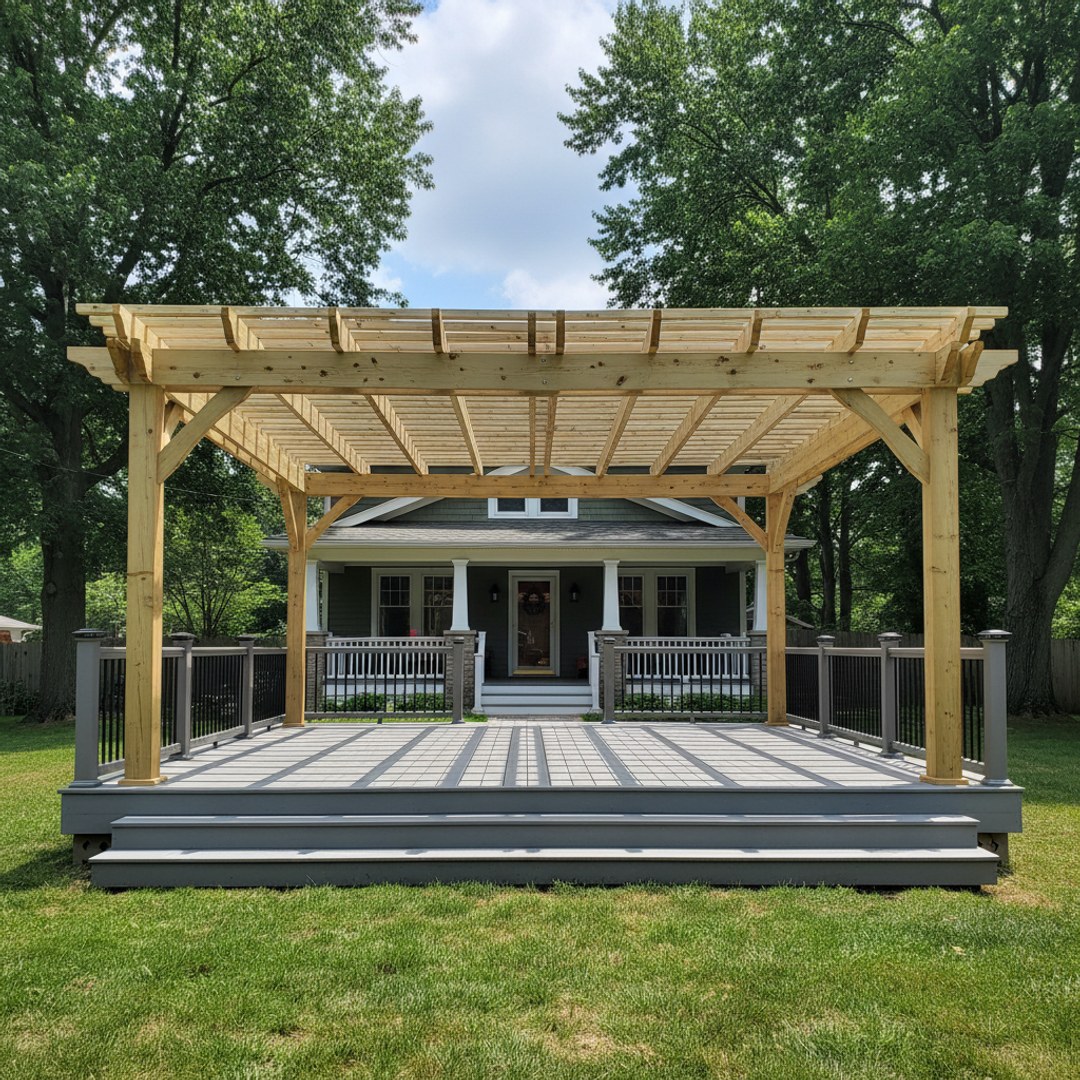
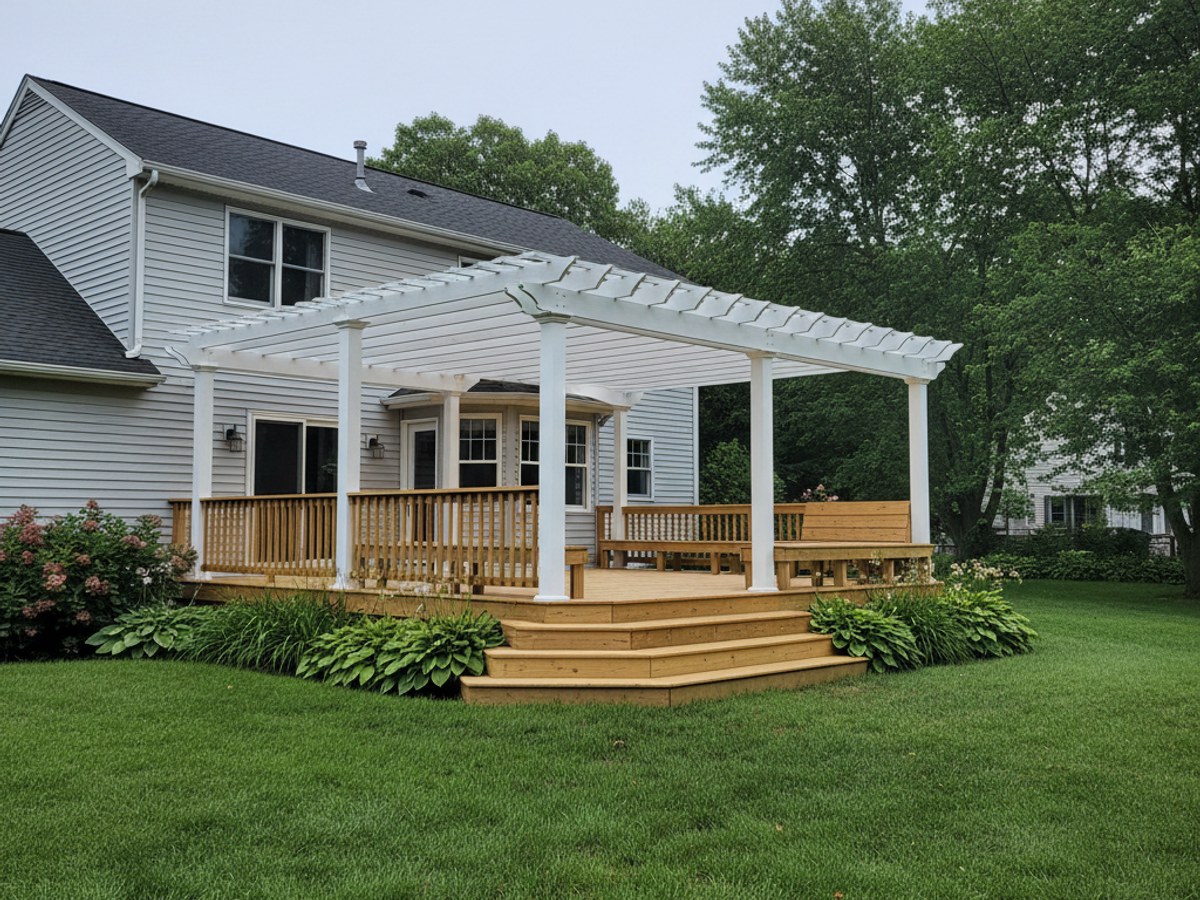
Some yards want a single level off the back door, others need stairs down a slope or a wraparound to work with an odd-shaped lot. We plan the layout around how you actually use the space, built-in bench seating, a spot for a grill, a step down to a fire pit. The design has to work with the framing underneath it, not just look good on paper.
Composite boards like Trex or TimberTech don't rot, but they require tighter joist spacing and hidden fastener systems to keep from warping between supports. We install joist tape under every board to keep moisture from wicking up into the framing. It costs more upfront than pressure-treated lumber, but there's no staining every couple of summers.
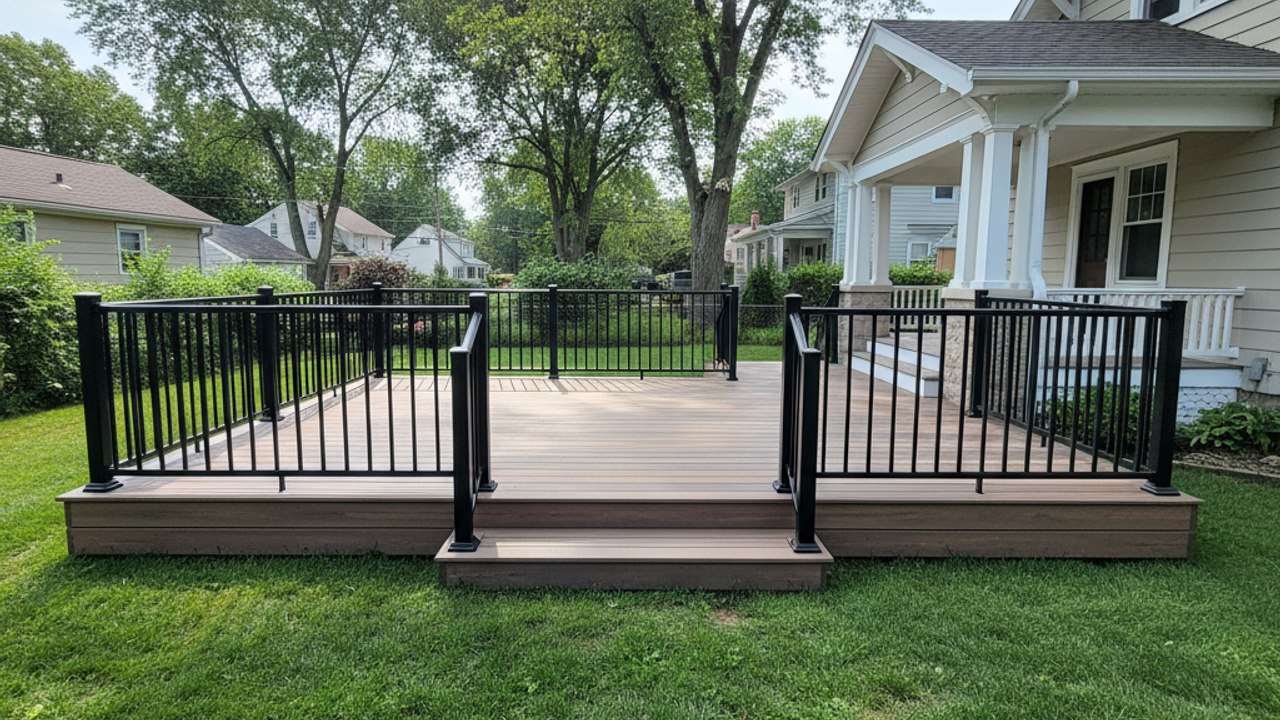
New Jersey code requires railings on any deck over 30 inches off the ground, with balusters spaced so a 4-inch sphere can't pass through. We build wood, aluminum, and cable railing systems, and cable needs a stiffer post than most people expect once it's tensioned. A railing that flexes when you lean on it wasn't anchored into the framing correctly.
If the frame underneath is still solid, you don't need a whole new deck, just new decking boards laid over the same joists. We check every joist for rot and soft spots before resurfacing anything, because new boards over a bad frame just hides the problem for a year or two. This is usually the cheaper route if the deck's under 15 years old.
Old decks come down board by board when there's a house or fence close by, and by machine when there's room to work faster. We haul away the lumber and check the ledger board area for rot before anything new goes up in its place. Demolition often turns up damage nobody knew was there until the old boards come off.
Stair stringers must be cut from lumber without knots near the notches, since that's exactly where they're likely to crack under weight. Rise and run have to stay consistent step to step, or people trip on the one stair that's different. We build stairs to match whatever railing and decking system is going in above them.
Some homeowners want part of the deck screened in to get a bug-free spot without building a full addition. We frame the roof structure to tie into the existing roofline, not just bolted onto the side of the house. This is a bigger job than a standard deck since it touches the roof, the siding, and sometimes the electrical for a ceiling fan or lights.
Four steps, and no surprises in any of them.
You tell us what you want doing, we look at what is actually there, and we ask the awkward questions early.
In writing, itemised, free. If something might add cost later we flag it now rather than at the end.
Same crew throughout. We cover your floors, keep the dust down and tidy up before we leave each day.
You point out anything you are not happy with and we fix it before the invoice, not after.
Coverage extends roughly 50 miles from Elizabeth for most deck projects.
Questions that come up once a deck project is underway.
Describe the problem and we will tell you what it probably is. No obligation.